

















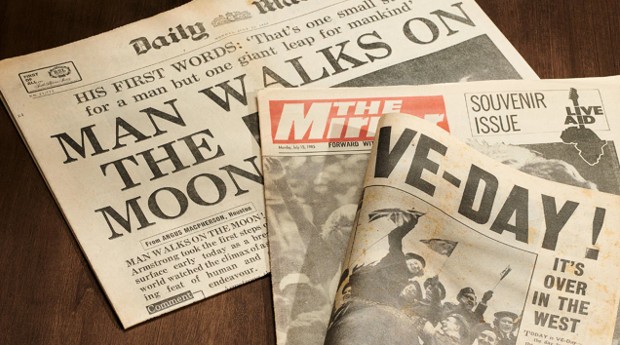





There’s something almost rebellious about holding a printed newspaper in 2026.
Not your phone buzzing with notifications. Not a TikTok clip cut down to 15 seconds. Not a headline you skim between classes. A real, physical newspaper, ink on your fingers, pages you have to turn, stories you actually have to read.
And honestly? That might be exactly what we need right now.
We are in the middle of a literacy crisis, and no one at school seems to talk about it enough. Test scores are dropping, attention spans are shrinking, and more students are struggling to read longer texts without zoning out. It’s not because we’re incapable; it’s because we’ve been trained to consume information in the fastest, shortest, most surface-level way possible. Scroll. Like. Move on.
Print newspapers force the opposite.
When you read something in print, you slow down. There are no pop-up notifications, no algorithm deciding what you should see next, no endless feed pulling you away after five seconds. You have to sit with the article. You follow it from beginning to end. You actually process it. That kind of reading builds comprehension, vocabulary, and critical thinking in a way that digital skimming just doesn’t.
And that matters more than we think.
Because literacy isn’t just about being able to read, it’s about being able to understand, question and engage with the world. If we lose that, we lose the ability to form informed opinions. We lose the ability to recognize bias. We lose the ability to participate in meaningful conversations about things that actually matter.
Right now, a lot of students get their “news” from headlines or social media summaries. But headlines are designed to grab attention, not explain the full story. Without deeper reading, it becomes easy to misunderstand issues, spread misinformation or just not care at all.
Print newspapers push back against that culture.
They offer structure. They prioritize full stories over snippets. They expose readers to topics they didn’t even know they were interested in, including local news, school events and community issues. You don’t just read what an algorithm thinks you’ll like; you encounter a range of voices and perspectives. That kind of exposure is essential for building empathy and awareness, especially in a school community.
And there’s something else we’re losing without print: connection.
A school newspaper isn’t just information, it’s identity. It tells the story of us. The games we win, the performances we put on, the issues we face, the voices we don’t always hear. When it exists physically, stacked in the library, handed out in the hallway, it becomes part of daily life. You see it. You pick it up. You talk about it with your friends.
A digital link doesn’t do that in the same way. It gets buried in emails or ignored in a bio. It doesn’t demand your attention; it competes for it and usually loses.
Bringing back print newspapers wouldn’t just be about nostalgia. It would be about rebuilding a culture of reading in a time when reading is quietly disappearing. It would be about giving students a reason to slow down, think deeper and engage more meaningfully with the world around them.
We don’t need to replace digital media. But we do need balance. Because if everything we read is fast, short and disposable, eventually our thinking becomes the same way.
And maybe the solution isn’t complicated. Maybe it starts with something as simple as putting a newspaper back in students’ hands.